© Global Voices Ltd 2026. All Rights Reserved.
The ‘Easy Route’ Is Closed
Translation
The ‘Easy Route’ Is Closed
Translation
Emma Lauchlan
17 July 2026
If you are a UK logistics manager or export director, you have likely received the notification from your freight forwarder by now. As of 1 January 2026, the French Government has abolished Article 289 A III of the General Tax Code.
For years, UK exporters moving goods into the EU via France under DDP (Delivered Duty Paid) terms relied on the ‘limited fiscal representation’ scheme, colloquially known as Regime 42. It was a convenient mechanism that allowed businesses to clear customs using a third party’s VAT number without ever needing to register the company in France.
That mechanism is now obsolete.
The French government’s move to tighten VAT fraud controls means the ‘one-off’ representation is no longer legally valid for non-EU entities. The consequence is binary. Either you possess your own French VAT number, or your goods do not clear customs.
The concern across UK manufacturing is not about paying the VAT. It is about the administrative deadlock of getting registered to pay it.
To obtain a French VAT number (SIRET), you must prove your legal existence to the Direction des Grandes Entreprises (DGE) or the Direction des Impôts des Non-Résidents (DINR). This is not a simple online form. You are required to build a registration dossier that mirrors the French K-bis requirements.
The required dossier generally includes:
Here is where the disruption occurs. The DGE generally does not accept documents in English. Nor will they accept a standard translation from a general agency.
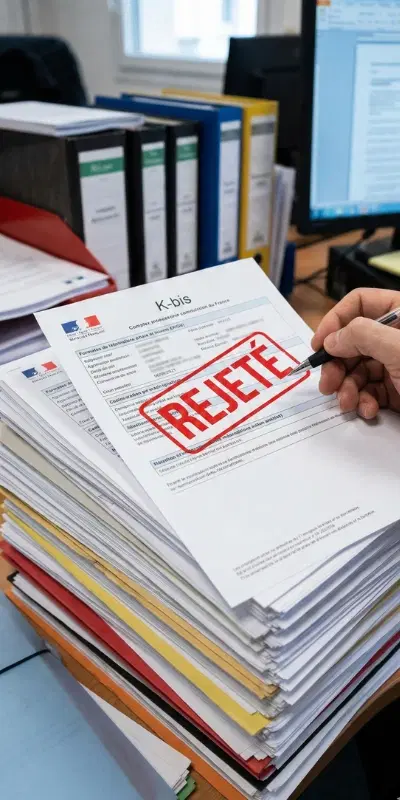
Many UK CFOs are currently making a critical error by sending their Articles of Association to a standard translation provider to save time.
They often assume that a standard ‘Certified Translation’, which in the UK essentially involves a simple agency declaration of accuracy, holds equal weight across the Channel. It does not. The French administrative system is rigid and views a translation without a judicial seal as nothing more than an informal draft. By failing to recognise this distinction between a commercial translation and a traduction assermentée, businesses are inadvertently submitting invalid dossiers. This results in immediate rejection by the DGE, forcing the entire application process to restart from zero while goods remain grounded.
This submission will be rejected.
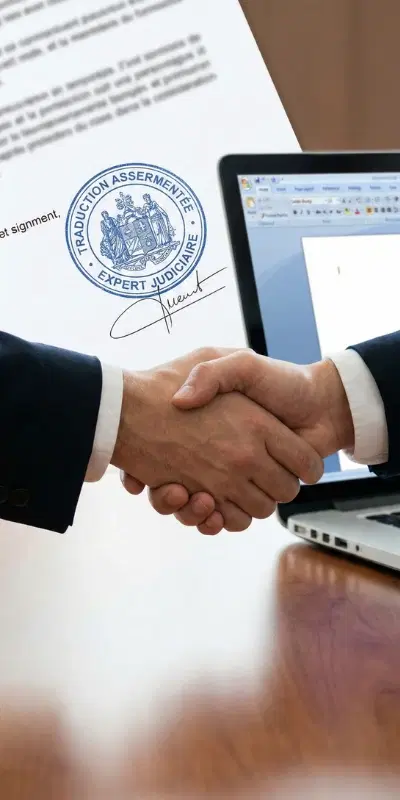
France operates under a strict Civil Law system where legal documents hold no administrative weight unless they are certified by an officer of the court. For VAT registration dossiers submitted to the DGE or DINR, the translation must be a Traduction Assermentée (Sworn Translation).
A standard translation is merely a linguistic rendering of text. In the eyes of the French administration, it has no legal value because the translator has no accountability to the French state. If you submit a standard translation of your Articles of Association, the tax officer cannot verify its authenticity. They will deem the document inadmissible, and your VAT registration application will be paused or rejected immediately.
The Role of the Sworn Translator A Traducteur Expert (Sworn Translator) is not just a linguist. They are a judicial expert appointed by a specific Court of Appeal (Cour d’Appel) in France. When they stamp a document, they are performing a public service function.
Official Reference: To verify these requirements, you may consult the ‘International Business’ section of the Impots.gouv.fr portal, which details the specific obligations for non-EU entities. Furthermore, the legal definition and mandatory status of a traducteur agréé (sworn translator) for administrative formalities are explicitly codified on the Service-Public.fr official administration platform.
If your dossier lands on a DGE desk without this specific stamp, the application stops, and your supply chain waits.
A frequent point of confusion for British directors is the distinction between notarisation and sworn translation. Many assume that having a UK public notary witness a standard translation provides sufficient legal standing. This is a fundamental misunderstanding of the French system. A UK notary confirms the identity of the signer but possesses no authority to certify the accuracy of the French text itself.
The French administration requires the specific seal of a Traducteur Expert because these individuals are officers of the French court system. Relying on a notarised document from London instead of a sworn translation from a court registered linguist will inevitably lead to your dossier being deemed inadmissible.
At Global Voices, we are a specialised translation agency. We do not provide tax advice or fiscal representation. However, we are the essential partner that enables your fiscal representative to do their job.
Your tax consultant cannot submit English documents. We resolve this specific bottleneck.
We have established a dedicated pipeline for UK Exporters facing the Regime 42 crisis. We manage the translation workflow to ensure strict compliance with French judicial standards.
The financial repercussions extend far beyond a simple rejected application or a delayed truck. When French customs authorities identify a shipment lacking a valid VAT number, the goods are immediately sequestered at the border. This triggers daily demurrage and port storage fees that accrue rapidly, often exceeding the profit margin of the shipment itself within a matter of days. Furthermore, under the tightened 2026 tax evasion protocols, operating without a valid registration allows the administration to levy penalties of up to 40% of the VAT due alongside significant interest charges.
Beyond the immediate financial sting, the long term operational damage can be irreversible. European clients rely on strict delivery models that cannot accommodate indefinite administrative delays. French buyers will not hesitate to void contracts and switch to EU based competitors if your compliance failure disrupts their production lines. Once your company is flagged for non compliance, you also risk being placed on a high priority customs watch list. This ensures that every future shipment faces rigorous and time consuming physical inspections, permanently slowing down your supply chain.

You must prepare for a process that remains heavily reliant on physical bureaucracy despite the modern digital age. The workflow for obtaining your French VAT number involves strict procedural steps that cannot be bypassed.
Do not expect a purely digital transaction. The validity of a sworn translation rests on its physical attributes.
The timeline for approval has lengthened significantly since the start of the year due to the sudden surge in applications from British firms.
You should anticipate a rigorous verification phase once your dossier lands on the desk of a tax officer.
It is a common misconception among British businesses that administrative compliance is merely a box-ticking exercise. In the context of the French tax administration—specifically the Direction des Grandes Entreprises (DGE)—this assumption is dangerous. The quality, currency, and legal precision of your supporting documentation are scrutinised with forensic attention to detail.
A dossier is not accepted simply because it contains files with the correct names. It is accepted only when the content, the dates, and the legal validity of every single page meet the rigid criteria of the French Civil Code. A minor discrepancy in a company name, a blurred passport scan, or a certificate dated four days outside the valid window will result in an immediate rejection.
To help you navigate this complexity and avoid the “rejection loop,” we have compiled the specific requirements for each component of your application.

France requires a K-bis extract (a live identity card for the company). As the UK does not issue this, you must artificially reconstruct its legal weight by combining two specific documents:
The Critical “Three-Month Rule” This is the single most common reason for failure. The French administration enforces a strict validity window on all status documents. Your Certificate of Good Standing must be dated within ninety days (3 months) of your dossier submission.

The DGE requires the full, unabridged text of your Articles. A frequent mistake is submitting “Model Articles” or an executive summary to save on translation costs. This is almost always rejected because the tax officer needs to see the complete internal hierarchy of the business.

Since your company is not established in France, you must appoint a fiscal representative via a formal legal mandate.

Under strict European Anti-Money Laundering (AML) directives, you must declare the individuals who ultimately own the business.


It is vital to understand that this is not a purely digital transaction. The French Sworn Translation system operates on a judicial tradition that prioritises physical evidence.
When we process your dossier, the Traducteur Expert performs a specific ritual:
This creates a “Hard Copy Dossier.” This physical object is the only version the DGE accepts. While we can provide a scan for your records, you must physically courier this original bundle to your fiscal representative. Losing this bundle means restarting the process and paying the translation fees again, as the expert cannot simply “re-print” a sworn document without re-certifying it by hand.
By adhering to this checklist, you move from reactive panic to proactive compliance. Your dossier is the key to the border; ensure it is cut correctly.
The queue for VAT registration in France is growing daily as thousands of UK firms react to the new 2026 rules. The French tax administration is currently overwhelmed by the sheer volume of applications from British exporters who left compliance until the last minute.
Processing times that once took weeks are now stretching into months. Every day you wait to submit a compliant, sworn-translated dossier is another day your shipments risk being held at the border, incurring storage fees and damaging client relationships.
Do not let a rejected translation be the reason your Q1 revenue stalls. Request a Quote today.